The main purpose of speed bumps is to reduce vehicle speed and improve safety in areas where pedestrians, vehicles, and property need better protection. Speed bumps are widely used in parking lots, residential communities, schools, industrial facilities, warehouses, and private roads to encourage drivers to slow down.
Unlike traffic signs that only provide warnings, speed bumps create a physical change in the driving environment. When correctly selected and installed, they help control vehicle movement, reduce speeding risks, and create safer traffic conditions.
HZ Traffic provides professional traffic safety solutions for different applications, helping businesses and organizations improve road safety with reliable speed control products.
What Is the Purpose of Speed Bumps?
The purpose of speed bumps is to physically reduce vehicle speed by creating a controlled elevation change on the road surface.
Speed bumps are designed to encourage drivers to slow down in areas where excessive speed may create safety risks. They are particularly effective in locations with frequent pedestrian activity, limited visibility, or mixed vehicle and foot traffic.
The main purposes of speed bumps include:
Reducing vehicle speeds in high-risk areas.
Improving pedestrian and worker safety.
Controlling traffic movement in private and commercial spaces.
Reducing the possibility of vehicle-related accidents.
According to the Federal Highway Administration, properly designed traffic calming measures can influence driver behavior and improve roadway safety.
Common locations where speed bumps are used include:
For customers who need to understand the correct installation process, proper speed bump installation helps ensure better product performance and long-term reliability.
How Do Speed Bumps Improve Traffic Safety?
Speed bumps improve traffic safety by reducing vehicle speed and giving drivers more time to react to pedestrians, obstacles, and changing road conditions.
Vehicle speed has a direct impact on accident severity. When vehicles travel at lower speeds, drivers generally have more reaction time and shorter stopping distances, which helps reduce risks in areas where pedestrians and vehicles share the same space.
For example, parking lots, residential communities, schools, and industrial facilities often include areas where vehicles move close to pedestrians. In these environments, speed bumps create natural speed reduction points and encourage drivers to maintain safer speeds.
Speed bumps are often used together with other safety equipment, including warning signs, road markings, reflective products, and pedestrian protection systems. A complete traffic management approach can provide better results than relying on a single safety product.
HZ Traffic provides different traffic control solutions designed for various environments. The appropriate solution depends on factors such as vehicle type, traffic volume, road layout, and required speed control performance.
Speed Bumps vs Other Traffic Control Methods
Speed bumps are one of the most direct traffic control methods because they physically influence driver behavior rather than only providing visual warnings.
Different traffic management methods are suitable for different applications.
| Traffic Control Method | Main Function | Suitable Applications |
|---|
| Speed Bumps | Physically reduce vehicle speed | Parking lots, private roads, residential areas |
| Traffic Signs | Provide warnings and instructions | Public roads and controlled areas |
| Road Markings | Guide driver behavior | High-traffic locations |
| Speed Monitoring Systems | Track and manage vehicle speed | Public road enforcement |
Compared with signs and markings, speed bumps provide a direct physical reminder for drivers to slow down. However, they should be selected according to road conditions, vehicle requirements, and traffic patterns.
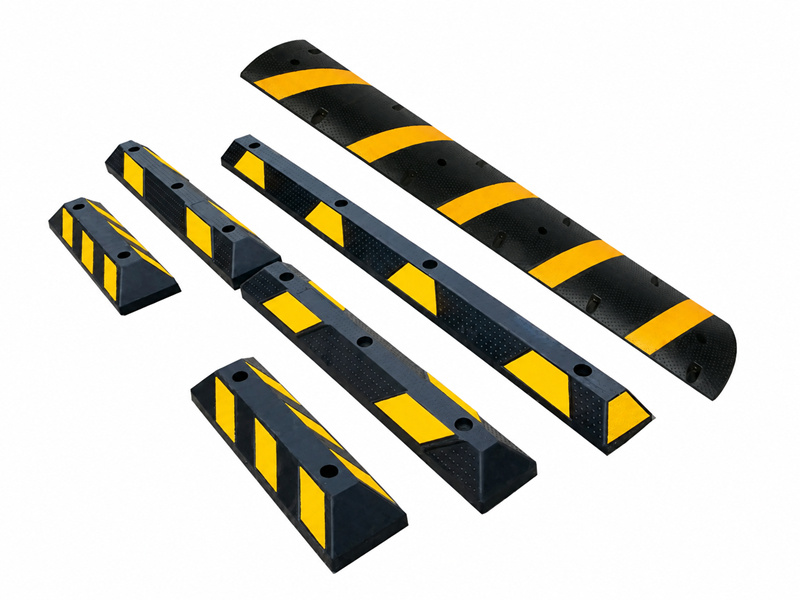
For areas requiring durable speed control products, HZ Traffic provides solutions such as rubber speed hump designed for parking areas, industrial facilities, and private roads.
What Factors Should Be Considered When Using Speed Bumps?
The effectiveness of speed bumps depends on correct product selection, installation location, road conditions, and regular maintenance.
Before installing speed control products, businesses and property managers should evaluate several important factors:
Vehicle type: Passenger cars, trucks, and heavy vehicles may require different designs.
Traffic volume: High-traffic areas require durable materials and reliable fixing systems.
Road environment: Parking lots, factories, and residential roads may have different requirements.
Visibility: Reflective materials and warning signs improve driver awareness.
Following recognized road safety guidelines can help ensure that traffic control equipment is installed correctly and used effectively.
Businesses planning traffic improvements can also consider suitable speed bumps for roads based on vehicle conditions, road structure, and safety requirements.
HZ Traffic focuses on providing durable traffic safety products that help customers manage vehicle movement while improving safety in different environments.
Conclusion
The main purpose of speed bumps is to improve safety by controlling vehicle speeds and reducing risks in areas where pedestrians, vehicles, and property interact.
When properly selected and installed, speed bumps provide an effective traffic management solution for residential communities, parking facilities, commercial properties, and industrial environments. They work best when combined with proper planning, visible warnings, and regular maintenance.
HZ Traffic provides reliable traffic safety products designed for different applications. By choosing suitable speed control solutions, organizations can create safer and more efficient transportation environments.
FAQ About the Purpose of Speed Bumps
1. What is the main purpose of speed bumps?
The main purpose of speed bumps is to reduce vehicle speed and improve safety in areas where controlling traffic movement is important.
2. Where are speed bumps commonly used?
Speed bumps are commonly used in parking lots, residential communities, schools, factories, warehouses, and private roads.
3. Do speed bumps reduce accidents?
Speed bumps can help reduce speeding-related risks by encouraging drivers to slow down and improving reaction time in areas with pedestrian activity.
4. Are speed bumps suitable for all roads?
No. Speed bumps should be selected according to road conditions, vehicle types, traffic volume, and safety requirements.
5. What is the difference between speed bumps and speed humps?
Speed bumps are usually shorter and create a stronger speed reduction effect, while speed humps are longer and provide smoother vehicle movement.
6. How should speed bumps be installed?
Speed bumps should be installed on suitable surfaces with correct positioning, secure fixing methods, and proper visibility measures.
 English